
The steel strapping that secures industrial loads on global shipping routes begins its journey in a steel strapping manufacturer’s facility. Understanding how steel strapping is made, what quality standards govern its production, and how to evaluate a manufacturer’s capabilities helps buyers make more informed sourcing decisions. This guide provides an inside look at steel strapping manufacturing from raw material to finished coil.
The Steel Strapping Manufacturing Process
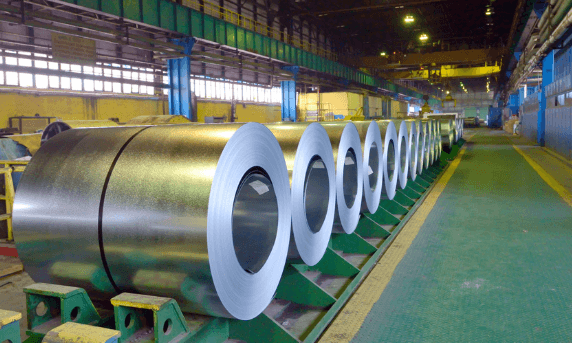
Steel strapping manufacturing begins with high-carbon steel coils sourced from steel mills. These coils are processed through a series of steps that transform raw steel into the precise, high-performance strapping used in industrial packaging worldwide.
Slitting and Rolling
Wide steel coils from the mill are precision-slit to the required width tolerances. The slit strips are then rolled to the specified thickness using precision rolling mills. Multiple passes may be required to reach the final dimensions while developing the correct mechanical properties.
Heat Treatment
Some high-tensile grades of steel strapping undergo controlled heat treatment to develop their strength properties. This process must be carefully controlled to achieve the target tensile strength without brittleness that would reduce joint efficiency.
Surface Treatment and Finishing
After processing, strapping is treated with wax, paint, or galvanizing depending on the intended application. Surface treatment protects against corrosion during storage and use, and the wax coating used on most standard strapping reduces friction in automatic strapping machine feed systems.
Quality Control in Steel Strapping Manufacturing
Rigorous quality control is essential to ensure that every coil of steel strapping meets specifications for tensile strength, steel strapping manufacturer joint efficiency, and dimensional accuracy. Leading manufacturers test every production lot against these specifications.
Key Quality Tests
Tensile strength testing verifies break strength meets specification. Elongation testing ensures the strapping stretches appropriately to maintain clamping force. Dimensional checks verify width and thickness tolerances. Joint efficiency testing confirms that sealed joints achieve the required percentage of bare strap strength.
- Incoming steel coil inspection for chemistry and mechanical properties
- In-process dimensional checks during slitting and rolling
- Tensile strength testing of each production lot
- Joint efficiency testing with representative sealing systems
- Surface coating quality and adhesion verification
Certifications and Standards for Steel Strapping
Steel strapping manufacturers should comply with relevant international standards. Key standards include ASTM D3953 (Standard Specification for Strapping, Flat Steel and Seals), which defines dimensions, strength requirements, and test methods for steel strapping used in North America.
See also: How to Improve Business Productivity
Frequently Asked Questions
What is the difference between regular and high-tensile steel strapping?
Regular tensile strapping uses lower-carbon steel and is more ductile. High-tensile strapping uses higher-carbon steel or heat treatment to achieve greater break strength for the same cross-sectional area, allowing narrower or thinner strapping to handle equivalent loads.
What is joint efficiency in steel strapping?
Joint efficiency is the percentage of the bare strap’s break strength that a sealed joint achieves. A joint with 80% efficiency on strap with a 1,000 lb. break strength will fail at approximately 800 lbs. Higher joint efficiency reduces the risk of joint failure before strap failure.
How is steel strapping packaged for shipment?
Steel strapping is typically supplied in oscillate-wound (ribbon) coils that feed smoothly into strapping machines, or in sheet-wound coils for manual or semi-automatic application. Coil weight typically ranges from 100 to 500 pounds depending on the coil dimension and strap size.
Conclusion
Understanding how steel strapping is manufactured provides valuable insight into the quality differences between suppliers and helps buyers ask the right questions during supplier evaluation. A manufacturer who invests in quality raw materials, precise processing equipment, and rigorous testing delivers strapping that performs consistently and safely in the most demanding industrial applications. Prioritize manufacturers who are transparent about their processes and can provide certified quality documentation for every shipment.