
Introduction
Every B2B marketing team asking what is the difference between SEO and AEO deserves a clear, practical answer—not a vague explanation that treats them as two names for the same thing. While SEO and AEO share a common foundation in content quality and technical soundness, they differ in their optimization targets, success metrics, tactical priorities, and the buyer behaviors they address. Understanding these distinctions is not an academic exercise—it is the basis for making informed decisions about where to invest your search marketing resources.
Distinction 1: Optimization Target
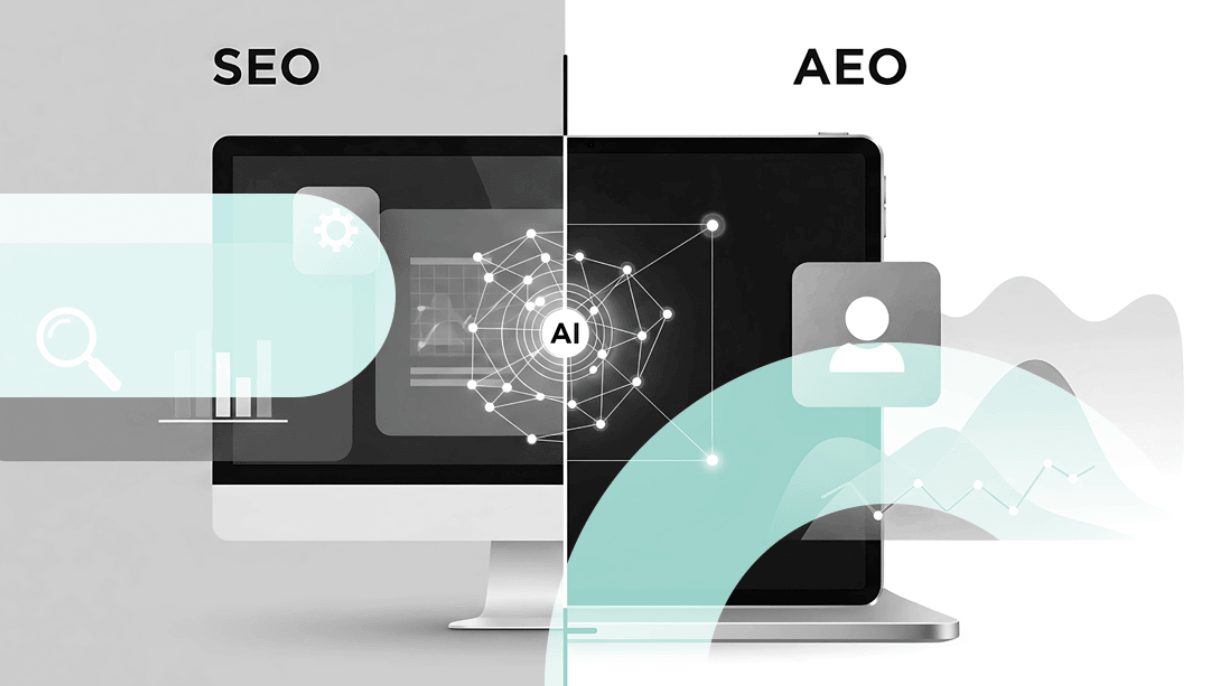
The most fundamental answer to what are the key differences between AEO and SEO is the optimization target. SEO optimizes for ranking algorithms—the mathematical models search engines use to order results on a page. The goal is to appear as high as possible in the organic results list. AEO optimizes for recommendation systems—the AI models that select, synthesize, and cite sources when generating answers. The goal is to be selected as the authoritative source, regardless of ranking position.
This distinction has practical consequences for every element of your search program. In SEO, keyword placement, link building, and meta tag optimization drive ranking improvements. In AEO, answer structure, entity authority, and content comprehensiveness drive citation selection. A page can rank number one in organic results and still be absent from the AI-generated answer for the same query—because the factors that earn ranking and the factors that earn citation are not identical.
Distinction 2: Content Structure and Format
SEO-optimized content is structured around keyword targeting: the primary keyword appears in the title, headings, meta description, and body text at a natural frequency. AEO-optimized content is structured around answer extraction: each section frames a specific question, the first paragraph delivers a direct answer, and the supporting content provides depth, context, and evidence. As the SEO.com analysis of OmniSEO illustrates, the most effective modern search strategies build content that satisfies both structural requirements simultaneously—not one at the expense of the other.
Schema markup plays a larger role in AEO than in traditional SEO. While SEO benefits from basic structured data, AEO depends on it. FAQ schema, How-To schema, Article schema, and Organization schema give AI systems explicit signals about your content’s structure and authority that supplement the signals they derive from the content itself.
Distinction 3: Authority Signals
In traditional SEO, authority is built primarily through backlinks—the quantity, quality, and relevance of other websites linking to your content. In AEO, authority is built through a broader set of entity signals that AI systems evaluate: brand mentions across the web, knowledge graph presence, third-party reviews, industry publication citations, consistent entity information across platforms, and social proof signals.
This is a critical dimension of what is the difference between SEO and AEO from an investment perspective. Building backlinks requires outreach, guest posting, and relationship building. Building entity authority requires brand management, digital PR, platform presence management, and knowledge graph optimization. Both are valuable, but they require different skill sets and different workflows. The Bing Webmaster AI Performance tools now provide direct measurement of how these entity signals translate into AI search visibility—a measurement capability that did not exist even a year ago.
See also: Technology in Entertainment Industry
Distinction 4: Measurement and Success Metrics
SEO success is measured in keyword rankings, organic traffic, click-through rates, and conversion rates from organic visitors. AEO success is measured in AI Overview appearances, citation frequency, recommendation presence, and the pipeline generated from AI-mediated search touchpoints. These measurement frameworks require different tools, different reporting cadences, and different benchmarks. Explore how AI-optimized inbound marketing programs build dual-measurement frameworks that track performance across both traditional and AI search environments.
The differences between SEO and AEO are real, practical, and consequential for how you allocate search marketing resources. Understanding these distinctions is the first step; the next step is building a program that addresses both disciplines in a coordinated, measurable way. If you are ready to move beyond the confusion and build a search program that performs in both traditional and AI-driven environments, request a free marketing audit and let KEO Marketing map the integrated strategy that will position your brand for both.