
Most people don’t think about their fountain pump until something goes wrong. The water slows to a trickle, the pond starts looking stagnant, or the fountain just stops. Then the questions start: Did I buy the wrong pump? Did I size it incorrectly? Could this have been avoided?
Probably yes. And it starts with understanding what a submersible fountain pump actually does.
What Makes It “Submersible”
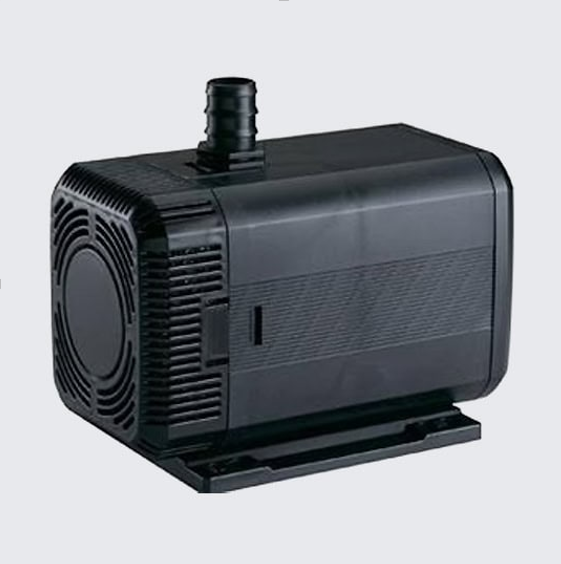
A submersible fountain pump sits fully underwater, either at the bottom of your pond or inside a skimmer box. Unlike external pumps, which sit outside the water and pull it in, a submersible pump pushes water up from below the surface.
The motor is sealed inside a watertight housing. That seal does two things: it keeps the motor dry, and it uses the surrounding water to keep the unit cool during operation. No water around it means no cooling. That is why running a submersible pump out of water, even briefly, can damage or destroy the motor.
GPH and Why You Should Care
GPH stands for gallons per hour. It tells you how much water the pump can move in an hour under ideal conditions. The operative word is “ideal.”
A common rule of thumb is to circulate the full volume of your pond at least once per hour. A 500-gallon pond needs a pump rated for at least 500 GPH. According to the U.S. Fish and Wildlife Service, proper water circulation is one of the most direct factors affecting oxygen levels and water quality in small water bodies.
The challenge is that GPH ratings on product labels are measured at zero resistance. The moment you add tubing length, height, or fittings, the actual flow drops. That is where head height comes in.
Head Height: The Number Most People Ignore
Head height is the vertical distance the pump must push water from the intake to the outlet. If your fountain nozzle sits 3 feet above the pump, your head height is 3 feet.
Every pump has a performance curve that shows how flow rate changes as head height increases. A pump rated at 800 GPH at 0 feet might only deliver 400 GPH at 4 feet of head. If you size your pump based on GPH alone without checking the performance curve, you are likely undersizing it.
Let’s break it down with a quick example. You have a 300-gallon pond with a fountain head 4 feet above the pump. You need 300 GPH at 4 feet of head, not at zero. Always check the manufacturer’s performance chart before buying.
Why Placement Affects Everything
Where you place the pump matters more than most guides admit. Setting a submersible pump directly on the pond floor is one of the more common mistakes. Debris, silt, and sediment collect at the bottom. If the intake screen sits right in that layer, the pump works harder, clogs faster, and can overheat.
Raising the pump a few inches off the bottom — on a small flat rock or a purpose-built pump stand — gives the intake screen better access to cleaner water. It is a small adjustment that extends the pump’s working life noticeably.
Also worth considering: distance from the waterfall or fountain head. The further the water has to travel horizontally and vertically, the more the pump has to work. Shorter, straighter tubing runs preserve more flow.
What Happens When You Get It Wrong
A pump that is too small for your pond creates more problems than just weak flow. Stagnant water builds up algae. Oxygen levels drop. In a pond with fish, it becomes a health risk. The EPA notes that dissolved oxygen below 5 mg/L begins to stress most freshwater fish species.
A pump that is oversized brings its own issues. Higher energy costs, turbulent water that stresses fish and uproots aquatic plants, and unnecessary wear on the motor itself.
There is no single “right” pump for every pond. The right pump is the one sized correctly for your specific water volume, head height, and intended use.
See also: What Every New Homeowner Needs to Know About Plumbing?
Maintenance Is Not Optional
Submersible pumps are low-maintenance by design, but not zero-maintenance. The intake screen should be cleaned every two to four weeks during peak season, and more often if you have fish or heavy debris.
At the start of each season, pull the pump out and inspect the impeller for debris or wear. If the pump is stored over winter in a freeze-prone climate, keep it submerged in a bucket of water indoors. Letting the seals dry out can cause cracking and reduce the unit’s lifespan.
According to the Irrigation Association, proper off-season storage is one of the top factors influencing the longevity of small water feature pumps.
The Bottom Line
A submersible fountain pump is not a set-it-and-forget-it purchase. It is a mechanical component that needs to be matched to your pond, placed correctly, and maintained regularly. Get those three things right, and it will run cleanly for years. Get them wrong, and you will be replacing them far sooner than you planned.